The 5 Pillars of Survival
At first I was afraid, I was petrified! (Surviving, the Hashtag way.)
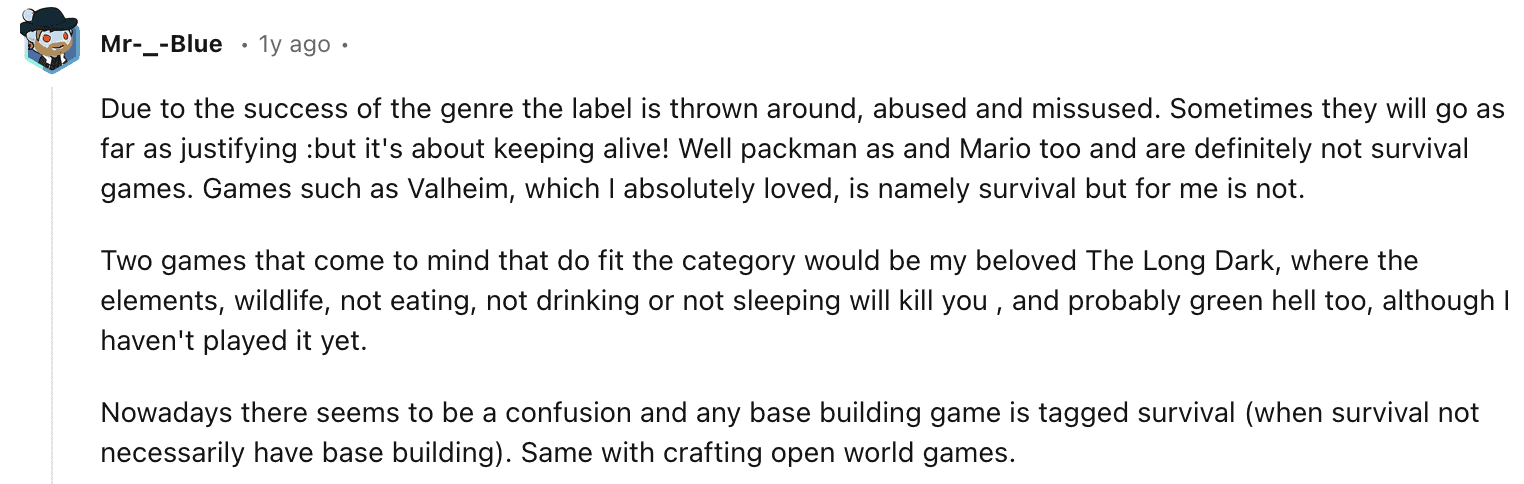
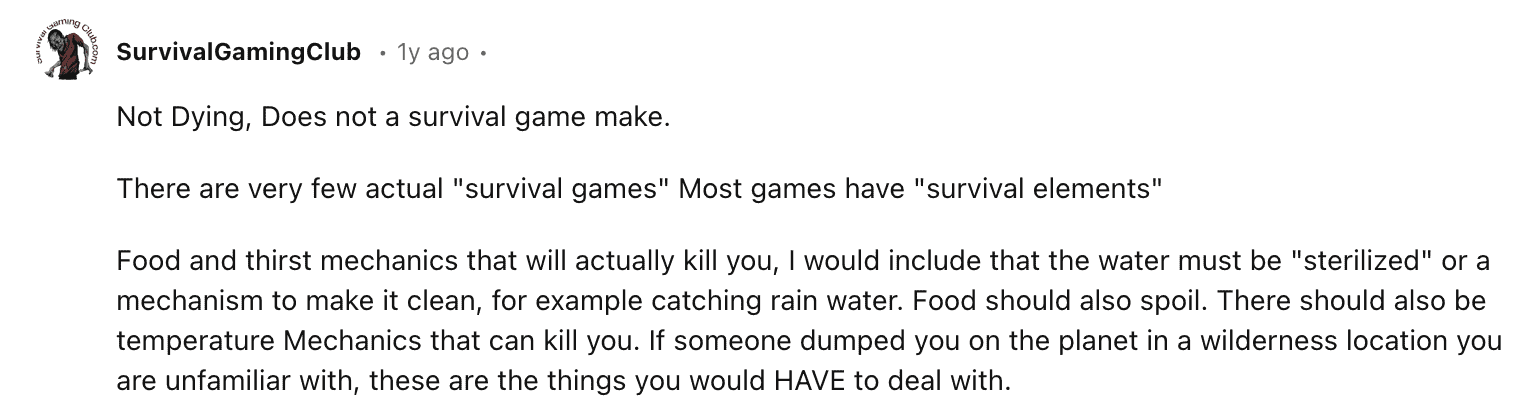
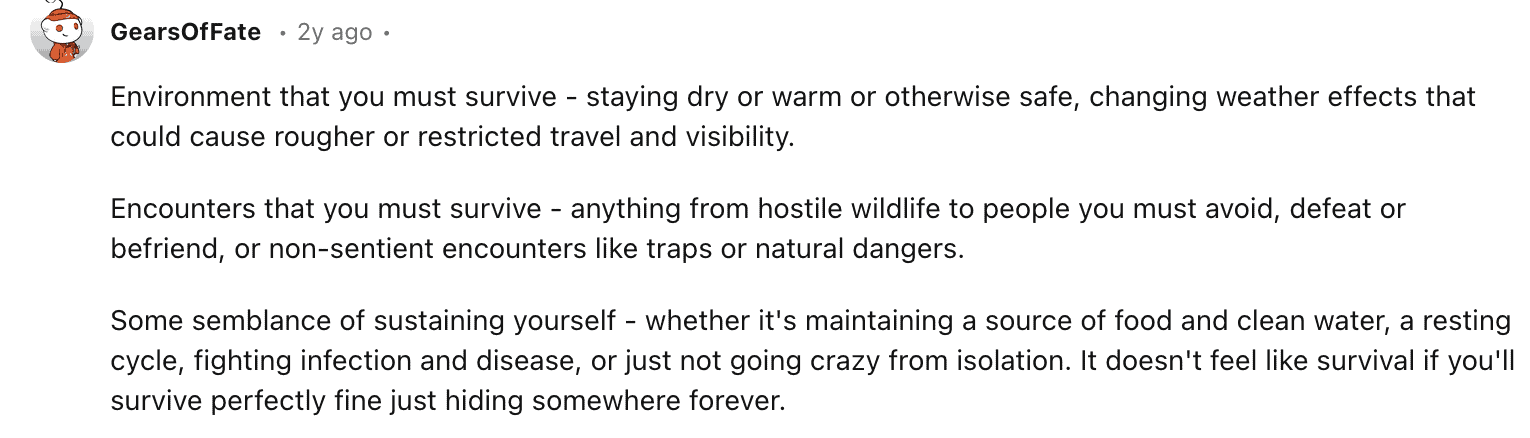
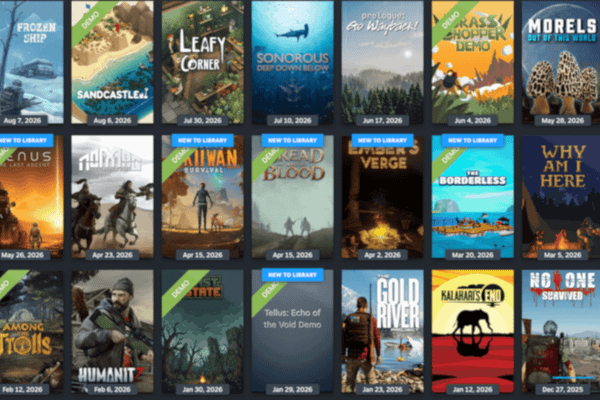
If survival just means "don't die in the game," then World of Warcraft is a survival game. Super Mario is a survival game. If it's "eat an apple, craft a hammer," then every game with a food bar qualifies. To me that's kinda bullshit: survival makes you work to survive - with friction, consequence, and the constant threat that your next decision might be your last. And finding a solid survival game these days is like like the world's worst scavenger hunt with few, if any, tools to help your search. (You can browse the Steam tags but it's a huge ass bucket these days.)
The 5 Pillars of Survival are about depth and integrating survival mechanics into the game’s core. They’re here to help me (and maybe you!) navigate the ever-expanding ocean of games sporting the survival tag in such a way that you can find games with a similar feel/vibe.
1. NECESSITIES
What it is: Your body's needs actively work against you: hunger, thirst, sleep, sanity, and temperature.
Why it matters: When you ignore your needs, consequences should escalate meaningfully and create real pressure on your other systems.
2. MANAGEMENT
What it is: Every item matters, every slot counts, every choice has weight.
Why it matters: Real scarcity forces strategy: what do you carry, what do you leave, what do you risk?
3. WORLD
What it is: Your environment is a living, breathing threat that changes around you.
Why it matters: Weather, seasons, darkness, and terrain should make you think twice before stepping outside.
4. RESOURCES
What it is: Nothing comes easy: hunt, gather, craft, and adapt to survive.
Why it matters: Every resource gained should feel earned, not handed to you by a generous loot table.
5. HEALTH
What it is: Complex injury and illness systems that go beyond "drink health potion."
Why it matters: Staying alive should be an active process, not a passive state between combat encounters.
When all five pillars support each other:
- You're cold (Necessities) and need to choose between firewood and medicine (Management)
- A storm is coming (World), and you haven't found shelter materials (Resources)
- You're injured (Health), and every movement risks making it worse
Tension naturally brews when Necessities, Management, World, Resources, and Health are in full swing. Each pillar amplifies the others. Remove one, and the tension can collapse.
- Does hunger actually threaten you, or is it just a minor inconvenience?
- Do you agonize over what to carry, or do you hoard everything?
- Does the world actively work against you, or is it just window dressing?
- Are resources scarce and precious, or abundant and trivial?
- Is health a complex system, or just hit points with extra steps?
"Games should be fun, not constant struggle!"
Survival games ARE fun - for people who want that specific challenge. If you don't want to manage hunger or hypothermia, play literally any other genre. That's like complaining that racing games focus too much on driving fast.
"If one thing isn't realistic, why does any of it matter?"
Because consistency of experience matters more than perfect realism, a survival game can have zombies and magic. Still, if you're not actually struggling to survive those zombies with limited resources and real consequences, it's just an action game with zombies. (Like 7D2D!)
"But I want to build and progress, not just survive!"
Progressive survival can absolutely work within this framework; the key is whether your building serves your survival or replaces it. Building a greenhouse to grow food through winter? That's survival-focused progression! Building a massive decorative castle while ignoring your basic needs? That's left the survival genre and become a building game with survival aesthetics.
"These rules are too strict!"
They're not rules, they're a framework for evaluating what makes survival feel like survival. Games can bend individual pillars, but when they ignore most of them, they don't qualify as survival, IMO.
Genre labels should be warnings, and not marketing tags. When you see "survival game," you should know what you're getting into (tension, scarcity, and the constant fight to stay alive) the same as you know what you're getting into with "FPS" or "platformer".
I'm never alone when it comes to this viewpoint, which I appreciate, but I hope to see more developers pick up the torch (dropped by Creepjy Jar after Green Hell and on hiatus with Hinterland (The Long Dark) but maaybee back with Blackfrost) because we need more action in this space!